In this post I mash up a quote from Walter Murch with a commonly heard expression in edit suites "you have to kill your babies" to see what light they might shed on each other.
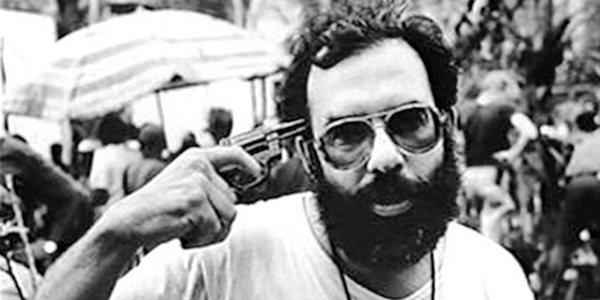
In a special film made exclusively for screening at last year's Griffith University post production symposium, Walter Murch said: "Movies are much smarter than the people who make them". What I took him to be describing is something that I have often experienced myself, and heard other filmmakers talking about as that moment when, if you can quiet your ego and 'listen', your movie will tell you what it wants to be. This is a magic moment in the edit suite. But it is not mystically magic, it is sensibly so. It makes sense that a movie, which has had the contributing focus of so many forms of genius from artists in words, design, shooting, performing and directing can, at some point, when all of the egos are quiet, illuminate a pathway to synthesize all of these contributions into a whole and complete form. The movie takes the intelligence of all of the combined contributors and synthesizes it into one intelligent being. So of course they are smarter than any individual who makes them, they are the brains of all of them.
So why do the movies always want the directors to "kill their babies"? Well I have a theory, but first I'd better explain what is meant by "kill your babies".
When the magic is not coming together in the edit suite, one thing an editor may have to do is to get a director to let go of the shot that he or she loves the most. The one they blew way to much of the budget on. The one they missed their grandfather's 80th birthday for. The one they caught pneumonia standing in the rain perfecting. These shots that the director is hanging on to, that are probably the most beautiful shots, are the ones that don't really fit into the evolving whole. They block the synthesis, they just 'don't work'. These shots are called the director's 'babies', and they have to be got rid of from the cut to bring the whole together.
But it is not enough to say that something just "doesn't work". I want to know why. So here is my hypothesis:
When directors articulate a vision, they are opening it to interpretation by others. They are creating a space, by being brilliantly articulate about their intent, for others to be creative with their special skills in realising that intent. They are allowing others in, and creating the potential for the movie to become very, very smart, by creating the boundaries for creative contributions. And so the baby grows up with the genetic code of many, and becomes smarter than all of them. Except for that one special shot. The one special shot, the one the director loves the most and worked the hardest to get, is usually the one that he or she imagined right from the very beginning, the one that came to their minds before they opened up the idea to a collaborative process. As such, it is too singularly owned by them. It is their unadulterated vision. But that word has a negative connotation. Better to say it is their unsynthesized vision. The fragment of their idea that didn't have enough input from everyone else to take on the collective DNA. So it stays a baby, its doesn't mature and yield its singular nature to the whole. And when the rest of the movie grows wise enough, smarter than the people who made it, it demands that the editor yield the ax, and the unsynthesised vision shots, the baby shots, or the 'diva' shots you might say - be dropped from the cut.
So why do the movies always want the directors to "kill their babies"? Well I have a theory, but first I'd better explain what is meant by "kill your babies".
When the magic is not coming together in the edit suite, one thing an editor may have to do is to get a director to let go of the shot that he or she loves the most. The one they blew way to much of the budget on. The one they missed their grandfather's 80th birthday for. The one they caught pneumonia standing in the rain perfecting. These shots that the director is hanging on to, that are probably the most beautiful shots, are the ones that don't really fit into the evolving whole. They block the synthesis, they just 'don't work'. These shots are called the director's 'babies', and they have to be got rid of from the cut to bring the whole together.
But it is not enough to say that something just "doesn't work". I want to know why. So here is my hypothesis:
When directors articulate a vision, they are opening it to interpretation by others. They are creating a space, by being brilliantly articulate about their intent, for others to be creative with their special skills in realising that intent. They are allowing others in, and creating the potential for the movie to become very, very smart, by creating the boundaries for creative contributions. And so the baby grows up with the genetic code of many, and becomes smarter than all of them. Except for that one special shot. The one special shot, the one the director loves the most and worked the hardest to get, is usually the one that he or she imagined right from the very beginning, the one that came to their minds before they opened up the idea to a collaborative process. As such, it is too singularly owned by them. It is their unadulterated vision. But that word has a negative connotation. Better to say it is their unsynthesized vision. The fragment of their idea that didn't have enough input from everyone else to take on the collective DNA. So it stays a baby, its doesn't mature and yield its singular nature to the whole. And when the rest of the movie grows wise enough, smarter than the people who made it, it demands that the editor yield the ax, and the unsynthesised vision shots, the baby shots, or the 'diva' shots you might say - be dropped from the cut.

 RSS Feed
