In this post I mash up a quote from Walter Murch with a commonly heard expression in edit suites "you have to kill your babies" to see what light they might shed on each other.
In a special film made exclusively for screening at last year's Griffith University post production symposium, Walter Murch said: "Movies are much smarter than the people who make them". What I took him to be describing is something that I have often experienced myself, and heard other filmmakers talking about as that moment when, if you can quiet your ego and 'listen', your movie will tell you what it wants to be. This is a magic moment in the edit suite. But it is not mystically magic, it is sensibly so. It makes sense that a movie, which has had the contributing focus of so many forms of genius from artists in words, design, shooting, performing and directing can, at some point, when all of the egos are quiet, illuminate a pathway to synthesize all of these contributions into a whole and complete form. The movie takes the intelligence of all of the combined contributors and synthesizes it into one intelligent being. So of course they are smarter than any individual who makes them, they are the brains of all of them.
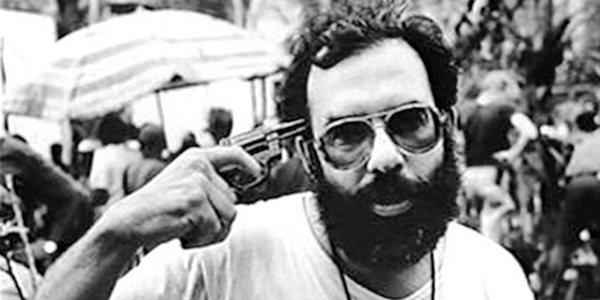
So why do the movies always want the directors to "kill their babies"? Well I have a theory, but first I'd better explain what is meant by "kill your babies".
When the magic is not coming together in the edit suite, one thing an editor may have to do is to get a director to let go of the shot that he or she loves the most. The one they blew way to much of the budget on. The one they missed their grandfather's 80th birthday for. The one they caught pneumonia standing in the rain perfecting. These shots that the director is hanging on to, that are probably the most beautiful shots, are the ones that don't really fit into the evolving whole. They block the synthesis, they just 'don't work'. These shots are called the director's 'babies', and they have to be got rid of from the cut to bring the whole together.
But it is not enough to say that something just "doesn't work". I want to know why. So here is my hypothesis:
When directors articulate a vision, they are opening it to interpretation by others. They are creating a space, by being brilliantly articulate about their intent, for others to be creative with their special skills in realising that intent. They are allowing others in, and creating the potential for the movie to become very, very smart, by creating the boundaries for creative contributions. And so the baby grows up with the genetic code of many, and becomes smarter than all of them. Except for that one special shot. The one special shot, the one the director loves the most and worked the hardest to get, is usually the one that he or she imagined right from the very beginning, the one that came to their minds before they opened up the idea to a collaborative process. As such, it is too singularly owned by them. It is their unadulterated vision. But that word has a negative connotation. Better to say it is their unsynthesized vision. The fragment of their idea that didn't have enough input from everyone else to take on the collective DNA. So it stays a baby, its doesn't mature and yield its singular nature to the whole. And when the rest of the movie grows wise enough, smarter than the people who made it, it demands that the editor yield the ax, and the unsynthesised vision shots, the baby shots, or the 'diva' shots you might say - be dropped from the cut.
See, Hear, Feel, Understand. These are the first four things I ask students to articulate when they look at a film. What do you see? What do you hear? What do you feel? What do you understand? This method of developing filmmaking skills through screen studies is based in a cognitive/phenomenological approach. It asks about perception, affect, and cognition - in other words: how does a film impact on your body, your emotions and your thinking? When students get used to articulating their insights through this approach (my acronym for it is SHFUA: see-hear-feel-understand-articulate) they are able to articulate something about how a given film works; how films in general might work as active processes that invite audiences to make meaning; and, importantly, how their own films might work. But 'see hear, feel and understand' just don't quite describe all of the activities of mind and body that interactivity offers. One could add 'participate' or even the obvious, 'interact' but for purposes of analysis and creating work, these become specific to the mechanics of the property one is talking about. They are about how you participate and interact, not why. So, I'd like to kick it up a level and introduce: CONATION. Here is what wikipedia says the word 'conation' means: "Conation is a term that stems from the Latin conatus, meaning any natural tendency, impulse, striving, or directed effort.[1] It is one of three parts of the mind, along with the affective and cognitive. In short, the cognitive part of the brain measures intelligence, the affective deals with emotions and the conative drives how one acts on those thoughts and feelings" Although "The term conation is no longer widely known—it is in "The 1,000 Most Obscure Words in the English Language," it is highly relevant to interactive screen based entertainment and I think it should be brought back into common usage for studying and creating interactive properties. Mike Jones and I have been teaching interactivity in a series of workshops for the [imi] project and AFTRS students. The workshop starts with asking: "what does an interactive screen story or experience need in order to get people involved?" The answer proposed in the workshop is: - motivation
- action
- rewardWhat motivates an audience to participate? What action do they do or role do they have to play? What is their reward? What I realised when I learned the word 'conation' is that these three things - motivation, action, and reward - speak to the CONATIVE aspects of mind.Put together with cognition and affection (understanding and feeling) conation adds volition, will to act, or, colloquially: an itch to scratch.  This notion of an 'itch to scratch' is immediately recognsiable in puzzle games like Tetris. When I see an unfinished line up of squares in Tetris I just want to line the squares up. I have no emotional feeling about them, I don't get any any insight from lining them up, I simply scratch the itch - satisfy my conative urging.
 The conative becomes more complex in story driven interactive entertainments like Dear Esther where the aesthetics make you feel haunted, and the story makes you want to uncover the mystery. In this case the affective and the cognitive drive the conative. Your 'itch to scratch' - your will to act - is integrated with dramatic questions and sophisticated feelings states.
The Physical TV Company, Richard James Allen, Mike Jones, Nathan Anderson and I are developing a new interactive property called More Lies based on a book by Richard. In this "interactive book/movie experience" the conative is driven by a direct audience relationship with the central character - a charming but unreliable narrator who needs your help... But when is he telling you the truth? The interactivity of the proposition offers you a way to scratch the itch of wanting to know: what is a crazy, compelling lie he is telling and what is a crazy, compelling truth? Creating More Lies will be an action research experiment in embedding the word 'conative' as a consideration in a creative process. Since it is a story based interactive experience we'll be asking, at each stage: how does an element make you feel? what does it offer to understanding? what conative response does it incite? Watch this space for notes on the process. (p.s. AFTRS students can expect to be discussing the conative in upcoming workshops, because I'm changing my acronym to: SHFUCA - see-hear-feel-understand-conate-articulate - Shall I paraphrase the now famous line from the movie ARGO? ARGO SHFUCA...)
This is part two of an essay first published in Lumina, the AFTRS Journal of Screen Arts and Business Part Two: Making Onscreen Drafts In part one of this series I challenged filmmakers to 'state their purpose' (see below). Herein I propose that we set up a funding system that creates onscreen drafts - sketches if you will - of our movies, and measures their potential success in the medium in which they will ultimately be realised rather than as a theory on paper. Here’s how it would work: Screen Australia would set aside a fund of $500,000 through which it can fund 10 filmmakers a year to make a $50,000 ‘sketch’ of their feature film. The sketch is shot with a skeleton crew as an onscreen proof of concept. They cut together the theory that has so far only been on paper to see how well it holds up on screen. As a screen story does it entertain, enlighten, stir or excite? If not, where does it fall apart? They revise and shoot again. It is possible to use a digital camera and laptop as a sketchpad. No masterpiece of visual art is created without first making sketches. Great orchestral scores start out as ideas sketched on one piano. Why wouldn’t we, now that we have the tools to do so, sketch cinema, which is an art of performance, dynamics, images and sounds, not of words on paper? A draft of a screenplay does not have to be finished to be sketched – sketching onscreen can actually be a part of re-writing and refining the script. In this way the ‘sketch fund’ encourages risk taking, allows for testing wild or unusual ideas, approaches, methods, and media. At the end of the year, Screen Australia has 10 feature film sketches for $500,000 dollars. One or two of these sketches will be so good that they warrant re-making with full production. Another two or so will be good enough that they warrant post-production funding to do grading, music, sound, vfx and possibly some extended pickups. The other six have been worthwhile investments: they have developed the skills and talent of people who may go on to produce even better ideas. The onscreen drafts idea is a variation on a system that is in place in Israel – one of the world’s most successful non-American cinemas. Katriel Schory, Executive of the Israeli Film Fund, spoke at Screen Australia in September 2010, about a system they have there whereby 10 teams a year get $50,000 to make their feature films. They get 300 applications for this ‘open door’ fund a year and if lucky they get a couple of good films out of it. Dr Ruth Harley, Chief Executive of Screen Australia, noted in that conversation that our industry is not structured in such a way as to make that possible – unions, crafts people, and distributors don’t function in that way, which is true. However, if we were to make $50,000 sketches, drafts, like script drafts but on-screen, rather than as finished products, then it would be possible to sustain the high level of craft skills and production values our industry can achieve, in fact put them to even better and more robust use, by applying them only to films which have already demonstrated that they are worth making. Further, we would be able to put the inexpensive digital technology, which is so powerfully shaking up traditional production methods, to good use. ‘Low-end’ gear could become a tool to help us make high-end productions better. There is one other source, for me, of this idea for onscreen drafts, which is our current historical moment. It has been a truism of the industry for at least 20 years that the most important element of a movie is story. While I make no attack whatsoever on the importance of story, I would just like to pause briefly to note that this truism has not always been absolutely true. From roughly 1920 to the late 1950s movies were a producer’s medium, in America anyway. They were made by studios and the most important things were stars and genre. If the producer knew his stars and his genres then he (invariably he, never she) would know, in rough terms anyway, his story. It would unfold in a certain way, affirm certain things, have set pieces to entertain, and the absence of these would mean it wasn’t getting made. As Matthew Campora describes in his essay: Financial Crisis, Depression and Other Uplifting Moments in the History of Cinema in issue 6 of Lumina, a change to the structure of industry in 1948, threw the studio driven system into crisis and made room for something else: a director driven system. The influence of the French New Wave films and theories had a tremendous impact on what got made and why. As is very entertainingly chronicled in Peter Biskind’s book Easy Riders and Raging Bulls, the first graduates of American film schools were concerned with story (which they also learned the theory of) but their primary concern was their directorial vision for screen storytelling. The revolution was in mise en scene, images, sound, performance, realism, message, iconography, meaning, cultural challenge – these took precedence over “story”. The writers were not the engines of storytelling the directors were the auteurs. Further, given the changes in culture and distribution modes available to them, these movies – Blow-up (Antonioni, 1966), Bonnie and Clyde (Penn, 1967), The Godfather (Coppola, 1972), Easy Rider (Hopper, 1969), and so on, made money. About the time Hollywood shifts away from auteur driven movies, screenwriting manuals begin to be published which declare the primacy of story and prescribe step by step ‘how to’ make a successful story. Since then we have found ourselves working within the notion that story is the most important factor in filmmaking, not mise en scene or directors vision, not genre, not stars. But change is a constant in our industry, and times are once again, or still, changing. The idea for onscreen drafts addresses the possibility that the factors which have each had dominance in the last one hundred years - genres, storytelling and stories – might now all come together to be worked in as part of the drafting process. Making onscreen drafts may be a way of to acknowledge that great movies are a product of all three. Making Onscreen Drafts adds to our arsenal of methods for measuring success by creating the possibility of measuring early, while it is still useful to the production to know how it is working. It minimizes the risks involved in creating something fresh and original by encouraging risk to happen in a draft stage, an inexpensive stage, a stage where if something doesn’t work it can be tried again differently. If we measure artistic success at draft stage, then we will be making the process of measuring success directly useful to filmmakers, while they can still do something about it. NEXT POST, PART THREE: THEORY, HISTORY AND COURAGE!
This is part one of an essay first published in Lumina, the AFTRS Journal of Screen Arts and BusinessPart One: Shifting Purpose from Artist to End User
Making films in Australia is not a very good way to make money, at least not for the filmmakers or investors. Making money can be helpful in some ways in measuring success, it may be a good thing to do, but it is not the purpose of our film industry. Knowing that the purpose of a government supported screen industry can’t really be to make money, we fall back, instead, on a platitude to justify our existence: ‘to tell our own stories’. This is problematic for a number of reasons, some of which I discussed in my essay for Lumina 2, ‘Make Our Myths’, but here are two reasons I didn’t mention in that essay: 1. it sets the bar too low, and 2. it allows purpose to rest with the creator rather than the end user. “Tell our own stories” sets the bar too low simply because there is nothing in the idea of telling our own stories that says they have to be good stories. Does ‘tell our own stories’ mean: tell any story as long as Australians, in Australia, tell it? Does it mean ‘speaking in an Australian accent’? (If so, my storytelling doesn’t qualify, nor that of any other first generation immigrant.) There is nothing in that stated purpose to say: tell good stories, stirring stories, entertaining stories, enlightening, exciting or affirming stories. The other issue ‘telling our own stories’ creates is that it implicitly allows the purpose of storytelling to rest with the teller, not the listener. To tell is a verb, the action it requires is complete once ‘telling’ is done. The focus, therefore is put on telling, and the teller, the speaker, the artist. This may seem insignificant, but in fact it belies the very idea on which our creative work is based, and to shift it would be much more radical than a simple change of wording would seem to imply. The notion that the purpose of art rests with the artist, the ‘teller’, expressing him or herself is a Romantic notion. It is neither universal, nor grounded in the deep history of our culture. In fact it is directly in conflict with the "Classical" principles of story organisation that many screen storytellers would say should guide their construction of story. This conflict, between formal structures and individual or even national expression of self is an unarticulated battle, going on beneath the surface, without acknowledgement of its battle lines or their implications for defining the purpose of our screen industry. As such it is beyond the scope of this essay to unravel, so instead I would like to propose a truce of sorts. Not that we return to the absolute stricture of a classical model at the peril of divesting our work of individual passion. Nor that we repudiate the Classical and embrace only the individualistic expression that Romanticism seems to promote. But that we find a middle ground by changing the words we use to define our purpose. In particular, shift our verbs so that they define our purpose as an action played on an audience rather than an action executed by an artist. Rather than falling back on a cultural platitude to justify a production’s existence, what if all funded productions articulated their purpose as a verb, that describes what they want to do to audiences, and then employ known craft skills to achieve that purpose. For example: If a team states their purpose as being: to entertain, then their production needs spectacle, action, possibly humour, definitely pace and rhythm. If it doesn’t have these, it won’t entertain. If members of our highly skilled industry know that it is their job to produce these, then they have a better chance of doing so. A production whose purpose is to enlighten needs metaphor – it has to be bigger than just the ordinary real if we are to see something differently. It needs pattern (aka structure) that is familiar enough to take us along with it, but fulfilled in a way that is fresh, that shows something in a new light. It needs to be about more than just the people, places and problems within it, by making those things metaphorical for the bigger ideas affecting humanity, the world and the challenges of life. A production that states its purpose as: to engage the mind through innovation in form needs an innovative approach to story structure, image or sound. Producing something with this intent requires a very strong knowledge and understanding of the ways in which story and storytelling have worked in the history of cinema thus far, so that images, sounds and structures can be re-configured meaningfully. If the stated purpose of a production is to stir, then the story needs some connection to the real - our emotion is stirred by empathy with something or someone we recognise as someone like ourselves (mimesis). It also needs hardship and triumph – release or catharsis has to be earned by overcoming hardship, working through obstacles for our emotions to be stirred. An often un-stated artistic purpose of many successful movies is to affirm ideals. 20th century art movements, and their theory and criticism, have in some ways made ‘affirmation of ideals’ a passé notion, associating it with the bourgeoisie rather than the avant garde, criticising the ideals many movies affirm from within the framework of a Marxist or Feminist ideology. However, a movie with nothing to say, no underlying philosophical premise, nothing it believes in or ‘ideals to affirm’ can be a pretty shallow experience. In order to affirm ideals of any kind, filmmakers need to know what they believe, what they stand up for, what they have to say. Entertain, enlighten, engage, stir and affirm are not mutually exclusive (and, of course there are many more purposes or ‘actions’ films can have). If these or other purposes are articulated, their achievement can be measured. We can say more than ‘it just works’ or ‘it just doesn’t work’ we can point to its intent and measure its success against its intent. We can describe what we know to the be factors something needs have to be entertaining, enlightening, engaging, stirring or affirming and ask ‘are these present’? Further, we can feel the films acting on us. We can be entertained, enlightened, engaged, stirred or affirmed and we will know it. Stating purpose is an important aspect of finding new ways to measure success because it creates a measurable that is clearly aligned with the film itself rather than with a standard that is less relevant to that film. If a good Australian movie doesn’t achieve box office on the scale of a bad American one, but achieves its stated purpose, we can be clear that it is a success. NEXT POST, PART TWO - OPPORTUNITY FOR FILMMAKERS: ONSCREEN DRAFTS
Not what they do, but what they could do
The conversation in a film school always seems to come round to whether directors understand what others on their creative teams do sufficiently well to collaborate. I suggest that If setting up classes wherein the directors learn what others do, it is important to teach their actions in relation to drama and story, not in relation to production.
· Design creates the image of character and culture or ‘world’, and sets up the cinematographer to reveal visual tone and metaphor
· The cinematographer reveals the drama, articulates perspective visually, and creates the visual expression of tone, metaphor, power relationships, time, and space, as set up by the designer.
· The editor structures the audience experience of the drama over time. They shape time, energy and movement of events, emotions and images to reveal the drama.
· The sound designer further shapes the experience with perspective, tone, energy (dynamics) mood and specificity of aural world and texture.
· The composer reinforces and articulates the structure of the experience, expressing all of the above (character, world, tone, time, energy, emotions, mood etc.) in an abstract form that binds all of the elements into a whole and complete expression of the drama.
· The director interprets the script, articulating what, in their view the drama is, and how the characters reveal it through their actions. He or she then has the task of conveying what the drama is, what the power relationships are, the perspective the production has on the events in the plot, and therefore the idea for culture or world, tone, metaphor, time, space, energy and movement to all collaborators.
· The writer instigates the cinematic revelation of drama by designing and expressing plot, and the action of characters, culture or world through it.
· The producer elicits an articulation of the drama and perspective (commonly referred to as vision) from the director and watches over the process for consistency of articulation and interpretation. Budgets and schedules are expressions of the ‘vision’ in numbers and the producer allocates the numbers through their coherent understanding of the drama and perspective.
The topics of common study between all disciplines, therefore are (or should be) character, culture or world, tone, metaphor, revelation, power, time, space, energy, movement and dramaturgy.
In screen studies we look for how these manifest in a range of productions, genres, time periods, cultures, industries, and particular creative teams. We ask the students to become fluent with these ideas through identifying and articulating them in existing works, and expect them to synthesize this learning by applying it, as a capacity for articulation, to their own work. We do not distinguish between disciplines in our expectations for their capacities to identify, articulate and synthesise.
|

 RSS Feed
